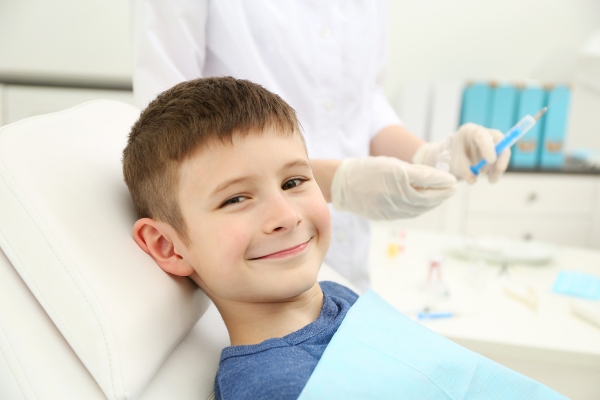
A kids dentist will routinely order dental X-rays for patients. For many patients, young and old, dental X-rays are not necessary at every visit. They can reveal key information about your child's oral health, as well as the development of the jaw. A kids dentist can use these X-rays to address various oral health concerns to ensure the child's oral health.
A safe, noninvasive way to check oral health
Also known as radiographs, dental X-rays reveal what is happening beneath the gum line without having to make incisions in the mouth. Numerous oral health conditions can be detected through these completely safe scans.
The U.S. Food and Drug Administration (FDA) considers the level of radiation that dental X-rays emit to be safe for children, although it recommends that scans only occur as necessary to limit radiation exposure. For reference, per the Cleveland Clinic, they emit about the same amount of radiation as smartphones, granite countertops, and the sun.
Young patients will wear protective aprons to prevent the radiation from reaching other parts of the body. Typically, the apron protects the entire front of the body. Parents can also request protective collars that fit around the neck and shield the thyroid from excess radiation.
When are dental X-rays recommended for children?
The American Academy of Pediatric Dentistry (AAPD) recommends that children get dental X-rays at several stages. For example, before their first permanent tooth, or adult tooth, erupts. Once the first adult tooth comes in, dental X-rays can reveal how well the rest of the adult teeth are developing beneath the primary teeth (baby teeth). Another key time is before the third molars, or wisdom teeth, are meant to come in.
Keep in mind that patients can benefit from getting dental X-rays every few years. If the patient has tooth decay, also known as cavities, they may benefit from getting them more often. There are also cases in which X-rays are necessary, such as when root canal therapy must be performed on an infected tooth. A kids dentist can provide personalized recommendations on how often X-rays may be needed.
Types of dental X-rays from a kids dentist
Dental X-rays can be broken down into two categories as follows.
Intraoral
Intraoral X-rays are those in which the sensor is placed inside the mouth. These include bitewing X-rays, in which the patient bites on tabs to help get a picture of the upper and lower teeth in various areas of the mouth. Other types of intraoral X-rays include periapical X-rays, which reveal the tooth and underlying jawbone to detect decay and gum disease, and occlusal X-rays, which can reveal impacted teeth, cysts, and jaw fractures.
Extraoral
Extraoral X-rays are any type of radiograph in which the sensor is located outside of the mouth. Panoramic X-rays are an example that takes a panoramic scan of the entire mouth. Thus, they can reveal the health of the jawbone, nerves, and arches of teeth. Within the same category, cephalometric X-rays reveal how the teeth are positioned in the jawbone. These X-rays can help determine whether the patient may be a candidate for orthodontic treatment.
Consult a kids dentist
Dental X-rays are safe and recommended for children as part of their oral healthcare routine. If you have questions or concerns, our kids dentist at Hudson Valley Pediatric Dentistry would be happy to help. We work to ensure parents feel comfortable and confident in their children's oral care. Contact us today for more information.
Request an appointment or call Hudson Valley Pediatric Dentistry at 845-363-4177 for an appointment in our Middletown office.
Recent Posts
Children's dental services can help prevent cavities by protecting young teeth, supporting strong enamel, and helping families build better oral hygiene habits. Pediatric dentists focus on prevention because children's teeth can develop decay quickly when plaque, bacteria, and sugary foods affect the enamel. Routine care helps identify small concerns early and gives children the support…
A kids dentist can restore teeth with tooth decay or cavities through treatments such as dental fillings and crowns. However, the best treatment is always prevention. Fortunately, a kids dentist has tips and techniques to help parents and children prevent cavities before they can form. Following these tips makes it possible for your child to…
A kids dentist can prevent, treat, and reverse gum disease. Through comprehensive dental treatments, they can address the bacterial buildup that contributes to the earliest stage of gum disease, also known as gingivitis. Comprehensive gingivitis treatments may involve deep dental cleanings, enhanced oral hygiene, and other approaches. The goal is to effectively treat and reverse…